Meet Our Educators
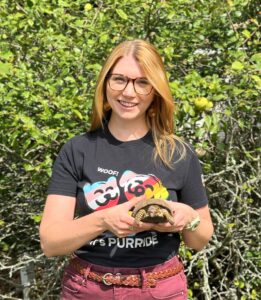
As a lifelong learner, Sandi is a National Geographic Certified Educator and is also on the Board of Directors for the Association of Professional Humane Educators. Outside of work, Sandi enjoys traveling, trying new foods, and exploring the outdoors!
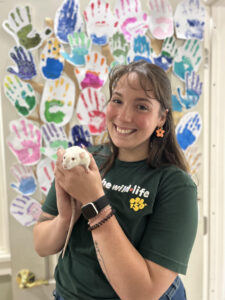
Her favorite parts about being an educator are getting to share her love of animals and conservation with others and inspiring people to make a positive impact on the world around them. In her free time, she enjoys painting, rollerblading, and re-watching Lord of the Rings with her cats. Katie also sits on the Board of Directors for the Association of Professional Humane Educators as well as her childhood summer camp, Camp Soles.
Meet our Education Ambassadors below!
Our educational animal ambassadors include wild and domestic animals who are a part of our Humane and Wildlife Education Department. They educate and inspire the community about the wonderful world of animals and how to positively coexist with them, with the goal of fostering a lifelong appreciation of animals and the environment.
Most of our ambassadors were once patients themselves but sustained permanent injuries or impressions that prevent them from being reintroduced to life in the wild. Some of these educational representatives can attend off-site programs and events, while others remain on our Wildlife Rehabilitation Center’s campus.
Learn more about our ambassadors’ stories and natural histories below!
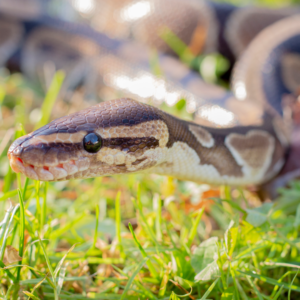
Jake – African Ball Python
Jake was transferred to our Wildlife Rehabilitation Center from one of our domestic shelter locations in 2013. Although the African ball python is not a native PA species, these snakes are known to be easy to handle and Jake, for one, serves as an excellent education ambassador!
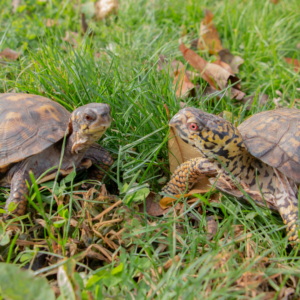
Adrienne and Vedder – Eastern Box Turtles
Adrienne (F) and Vedder (M) came to us separately for various reasons. Our education ambassador turtles were either injured in the wild or taken as pets and improperly cared for by members of the public. Vedder is missing the toes on his front leg and has a shell injury. Since our box turtles cannot be released, they remain with us as educational ambassadors!
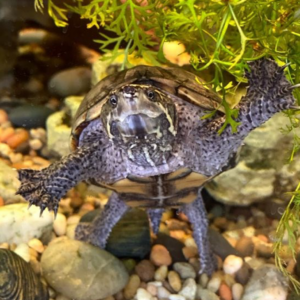
Stinky Pete – Common Musk Turtle
Stinky Pete was brought to us in the summer of 2016. He was a member of the public’s pet for 20 years, and when they could no longer care for him, Stinky Pete joined us at the Wildlife Rehabilitation Center. Musk turtles are native to Pennsylvania, but since Stinky Pete was cared for over such a long period of time, he would not have been able to fend for himself in the wild. The Common musk turtle’s name comes from the smelly odor they release when they are spooked or defending themselves.
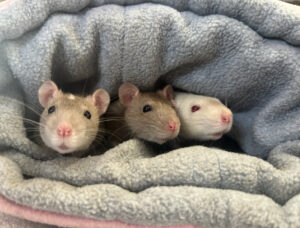
Lily, Lilac, and Lavender – Domestic Rats
Lily, Lilac, and Lavender joined the education team at the end of 2024 and have been changing the way that people view rats ever since. The girls are experts at exploring and interacting with their enrichment, especially if their favorite snacks are involved! Rats make great companion animals, and some rats have even been trained to assist in search and rescue!
In Memoriam
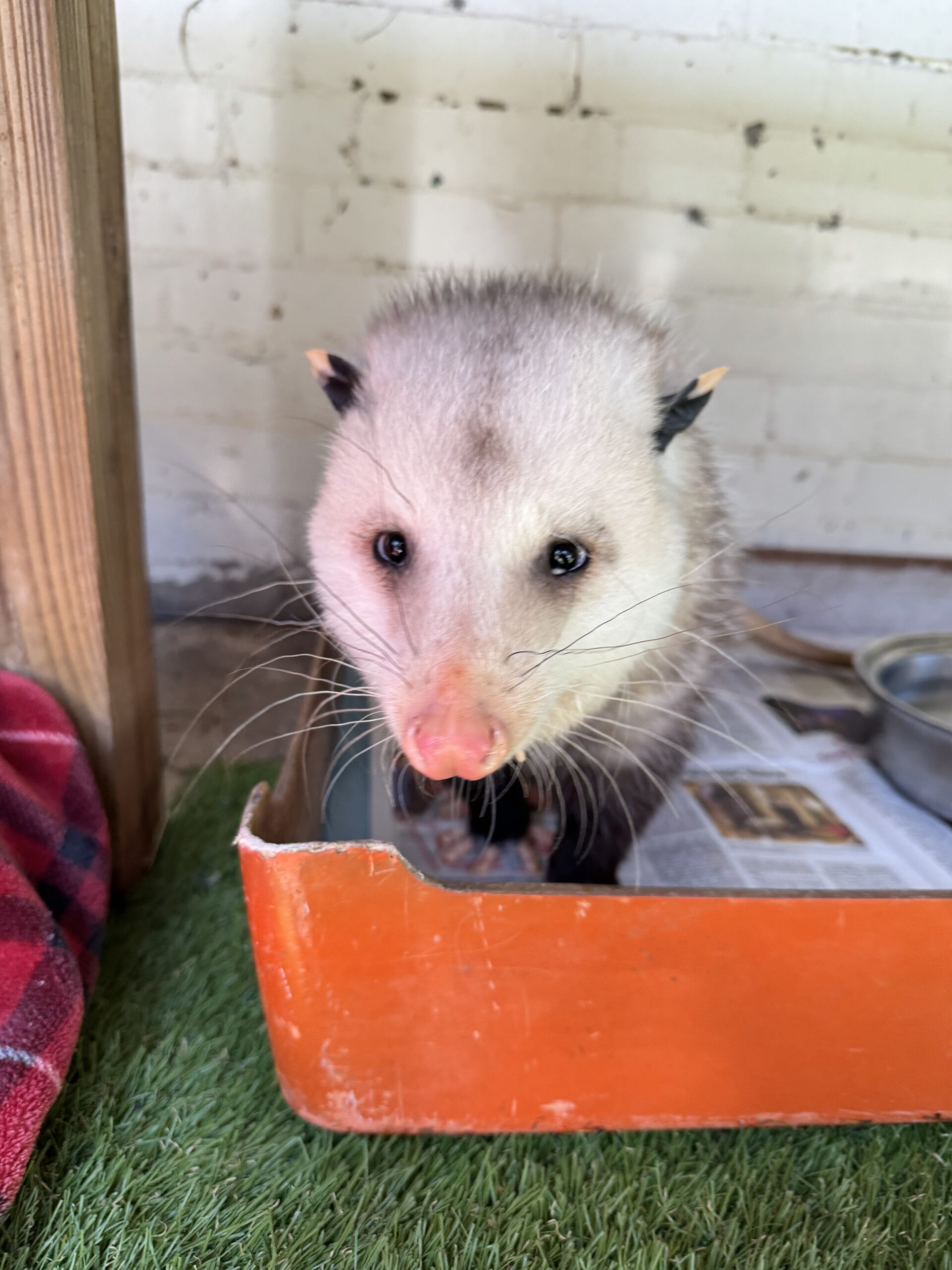
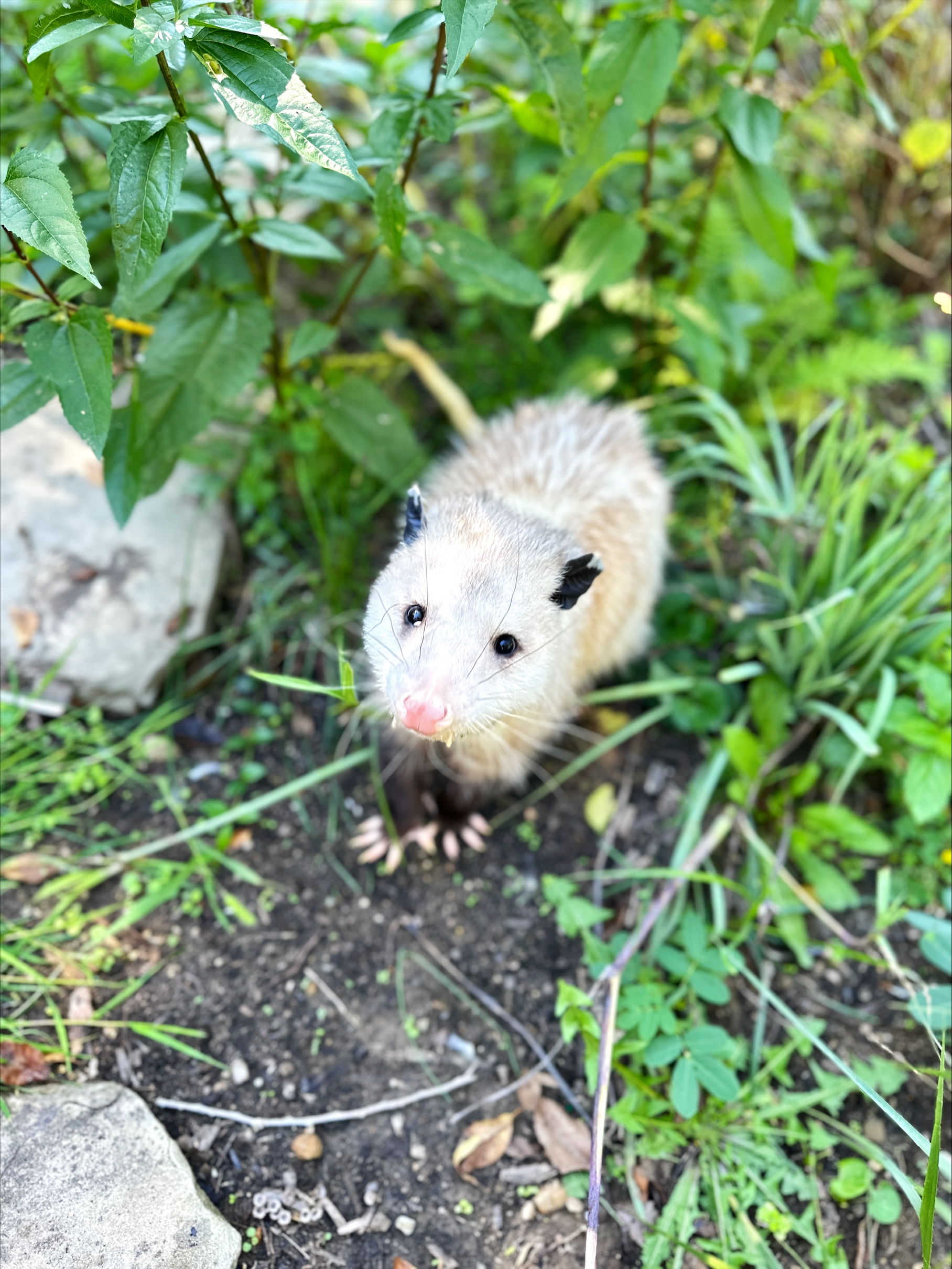
Bert (image on the left in the orange dig pan), the Virginia Opossum – Bert was originally brought to our Wildlife Rehabilitation Center alongside his brother, Ernie, as a patient. Due to habituation prior to being admitted, they were deemed non-releasable. Bert passed away in April of 2026. Bert greatly enjoyed receiving his daily afternoon snack from the Wildlife Rehabilitation Center clinic staff.
Ernie (image on the right in the garden), the Virginia Opossum – Ernie was originally brought to our Wildlife Rehabilitation Center alongside his brother, Bert, as a patient. Due to habituation prior to being admitted, they were deemed non-releasable. Ernie passed away in February of 2026. Some of his favorite activities included walking around and sniffing our pollinator garden.
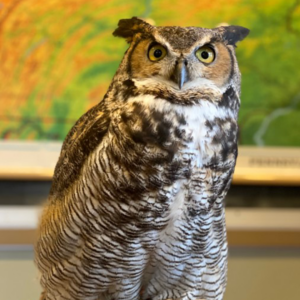 Martha came to us in 2005 as an adult patient. Her left wing droops due to an injury she suffered in the wild and, because of this malady, she is not able to be released. In addition to serving as an educational ambassador at programs and events, Martha also plays an important role in the rehabilitation and release of orphaned great horned owlets. When these owlets are brought in for treatment, they are often placed in Martha’s enclosure for foster care so she can show them how to act like typical great horned owls.
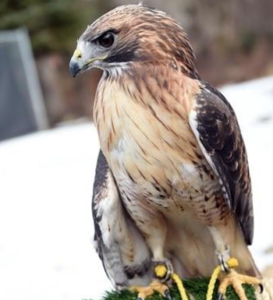 Chuck arrived at our Wildlife Rehabilitation Center as an adult patient with an injured right wing that prevents his release. While in his enclosure, he enjoys resting high up on his perches and communicating with the local red-tailed hawks who fly above the area. Chuck is an educational ambassador and travels to events and programs to teach the public about red-tailed hawks.
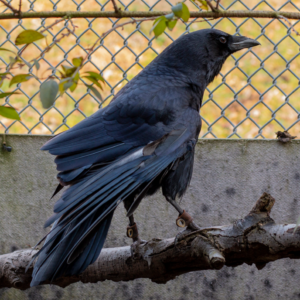 Ray arrived at our Wildlife Rehabilitation Center in 2002 as an adult patient. His right wing was injured in the wild, preventing him from being released. Ray is an extremely social and eager education ambassador, and even attempts to mimic human voices. Ray enjoys meeting new people and vocalizing his favorite phrase, which sounds roughly like “ssskkwhyyy.”
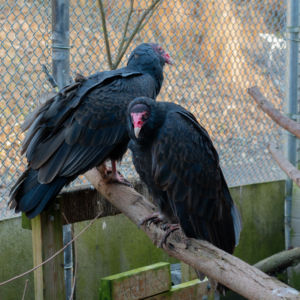
Sid and Vinnie came to us as adult patients with a wing injury. Sid and Vinnie lived with each other a number of years, and acted as excellent foster parents for juvenile black vulture and turkey vulture patients at our Wildlife Rehabilitation Center!
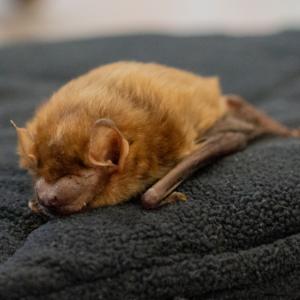
Bruce had been an ambassador since the early summer of 2016. Bats are a crucial part of the environment, eating hundreds of bugs each night. In fact, Bruce can eat between 10 and 20 mealworms in one feeding!
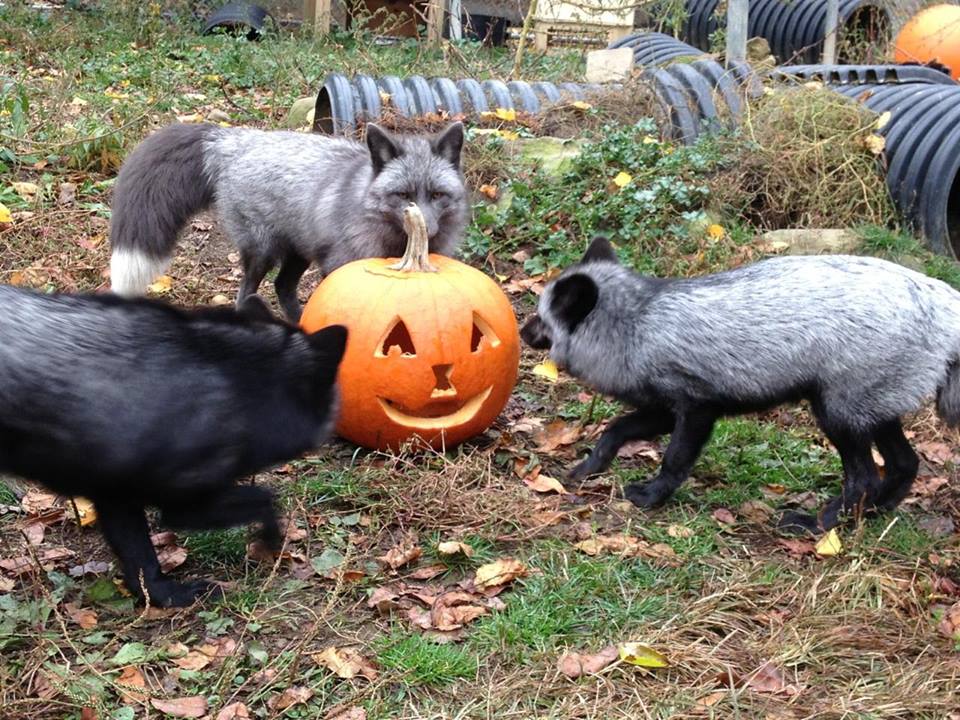
Jacob, Davey and Captain were purchased in Ohio and illegally brought into PA as pets and then brought to us by the Pennsylvania Game Commission in 2012. In 2013, we built a larger wildlife enclosure for them directly in front of our wildlife clinic. “Silver” foxes are a melanistic form of the Red fox. (i.e. they are red foxes with an overabundance of dark pigmentation). The foxes were not releasable because they are captive bred and habituated to people. As education ambassadors they brought joy to many visitors.
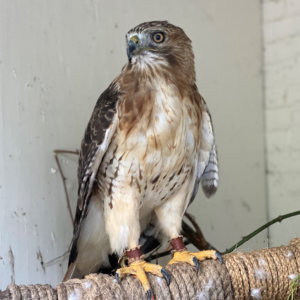 Amenti came to the Wildlife Center as a patient in 2019, and was diagnosed with West Nile Virus. While she overcame the virus, she now has some lasting effects that prevent her from being released back to the wild. She has been learning the ropes here at the Wild Side ever since! Because of her young intake age, we were able to witness Amenti’s red tail feathers grow in. Red-tailed hawks get their red tail feathers around two years old! Amenti is also highly food-motivated and does well with daily training from staff. Training sessions are not just fun but also important for their health! We want to make sure they are comfortable, active and mitigate stressors to ensure a healthy ambassador! Training sessions help positively reinforce important behaviors such as getting a daily weight and allows the bird to choose to participate in their care.
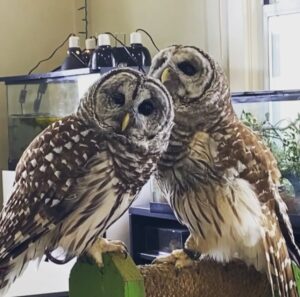 Leela came in as a patient at our Wildlife Rehabilitation Center in fall of 2018. Her right eye is non-functional and prevents her from seeing well enough to pass her flight tests. Cecilia came to us from another rehabilitation center in 2014 as an adult. She had an injured left shoulder that resulted in a full amputation of her wing. Cece and Leela live together and love sharing a perch. In the wild, barred owls can hang out in communities and raise their young together.
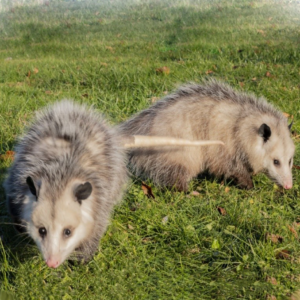 Thelma and Louise came to the Wildlife Center as patients in 2021 as juveniles after a member of the public had kept them, and they became habituated. Opossums often get a bad reputation, but did you know that opossums can eat over 5,000 ticks a year? Thelma and Louise help teach the community that there is a lot more to these creatures than what meets the eye!
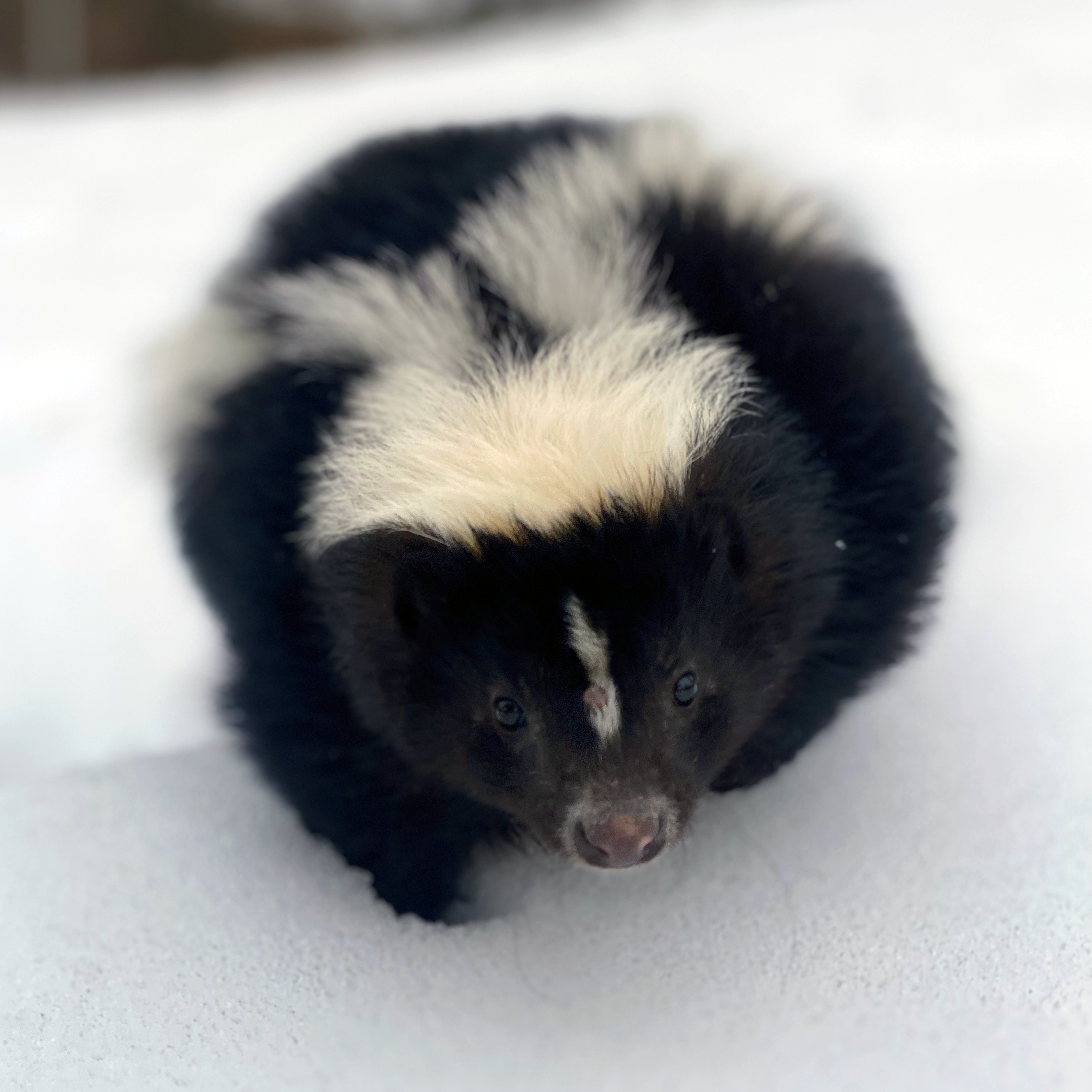
Clover is a de-scented striped skunk who was born in May of 2016. While Clover cannot spray, she can still stomp her feet and raise her tail as if she were about to perform the mechanism for defense! Clover is a very active skunk and loves to dig for her favorite snacks-mealworms! Skunks have an incredible sense of smell and long, shovel-like nails to help them excavate their dinner!
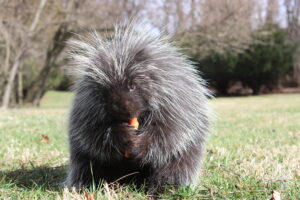 Irwin came to the WRC in May 2011 as a porcupette shortly after he was rejected by his mother. He was just two weeks old! He was deemed non-releasable due to his dietary restrictions, but he was an ambassador for the ages teaching folks about these misunderstood PA natives! Overall, he had met well over 10,000 people in person on education programs alone in his time as an ambassador! (Not to mention all the folks he’d touched through his social media stardom and even as a guest on KDKA’s Pittsburgh Today Morning Show!)
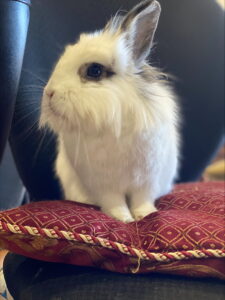 Starting with her surprise birth while in care, Buster was hand raised by WRC staff! While a rabbit’s time with us on earth is short, her presence made an impact with memories and lessons that will transcend a lifetime. Buster helped countless Girl Scouts receive their pets badge. The summer camp kids loved her, always referring to her as the queen or your majesty, a title she more than deserved. Buster helped people understand that there is more to animals than what meets the eye; that intelligence, personality, resilience, and love can be found in even the smallest of creatures.
NEWSLETTER SIGN UP
Interested in more content like this? Subscribe & follow us to stay up-to-date.